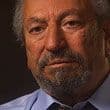
Interviews with Saad Eddin Ibrahim
Egypt
Nelson Mandela
Ibrahim on Nelson Mendela.
Transcript
Well, Mandela– you know, Mandela was a great inspiration to me. And– when I was in prison, he tried to intercede on my behalf with the– Mubarak regime. Having failed to get me released, he sent me a copy of his book The Long March to Freedom with his personal inscription. And it was quite an inspiration to me.
And quite, you know– a– a– it is a book that helped me a lot reading through it, going through Mandela´s experiences. I felt as if he was– those third of my own experiences coincide with his own. And whenever– when I finished it, everybody in prison wanted to read it. I mean, at least in my cellblock.
So, that book made the round– to the delight of the South African ambassador who had brought the book and brought small gift, which was a– a comforter with all the flags of, like– very colorful flags of South Africa on the comforter. And when I got into the second chapter of Mandela, I– it was a very strange gift to start with– comforter.
But, when I got to second chapter of Mandela´s book, I realized that the w– the worst thing that he suffered from was feeling cold on a cement floor in his cell. And he seemed to have felt that every presen– prisoner in the third world probably had the same kind of treatment. So, having been unsuccessful in getting the Mubarak regime to release me, he sent me a book and that comforter.
About Saad Eddin Ibrahim
Saad Eddin Ibrahim is professor of sociology and one of Egypt’s leading voices for democracy and human rights.
Ibrahim was born in 1938 in Mansura, Egypt. He studied at Cairo University, and later in the United States at the University of Washington. He was initially targeted by the Egyptian government after suggesting on a radio show that President Mubarak would attempt to hand power illegitimately to his son Gamal. Ibrahim was charged with “defaming” Egypt abroad and accepting funds from the United States for election monitoring without permission and was sentenced to seven years in prison. Many foreign governments, including the United States, called for his release. Although Egypt’s highest court eventually threw out his sentence and ordered him released, the ordeal severely damaged Ibrahim’s health. Under threat of re-arrest, Ibrahim left Egypt in 2008 to live in the United States.
Ibrahim is the author or editor of more than 35 books in Arabic and English and has published more than 100 scholarly articles.