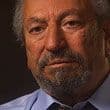
Interviews with Saad Eddin Ibrahim
Egypt
Impact of Technology
The impact of technology on Egyptian democracy movements.
Transcript
We have, in a country like Egypt, in the last three, four years, Whenever there was a chance for a plebiscite, an election, municipal, local, whatever– people would use cell phone. Not only to communicate with each other, but also to document rigging.
Because many of these cell phones have cameras, as you know. So, many have used them, also, to document torture in police stations or in prisons. And to bring it out innocently to the world so they become a cause for Amnesty International or Human Rights Watch, or other– rights organizations.
All of this is helping the freedom and the democracy movement. Technology here has– and especially young people are very adept in using that technology. Not– older generation, like myself– who can just barely use– a cell phone– or the computer. But young people are very, you know, very skillful in using that technology, and they have. And they managed to, in fact, to embarrass a regime and to document its violations– both in the electoral process as well as during investigation or in police stations….
On balance I would say that our activists, fellow activists, have been outpacing the government in using technology. Because they are young, agile, skillful, and they´re way ahead. And by the time the state security in a country like Egypt, or the state operators catches up with them, they´re already one step ahead.
And it´s hard. Okay, everybody´s using whatever means they can use. And– but it is more of a fair fight now, with regard to modern technology, than it ever was, or than it was, let´s say, during my early incarceration some 20 years ago.
About Saad Eddin Ibrahim
Saad Eddin Ibrahim is professor of sociology and one of Egypt’s leading voices for democracy and human rights.
Ibrahim was born in 1938 in Mansura, Egypt. He studied at Cairo University, and later in the United States at the University of Washington. He was initially targeted by the Egyptian government after suggesting on a radio show that President Mubarak would attempt to hand power illegitimately to his son Gamal. Ibrahim was charged with “defaming” Egypt abroad and accepting funds from the United States for election monitoring without permission and was sentenced to seven years in prison. Many foreign governments, including the United States, called for his release. Although Egypt’s highest court eventually threw out his sentence and ordered him released, the ordeal severely damaged Ibrahim’s health. Under threat of re-arrest, Ibrahim left Egypt in 2008 to live in the United States.
Ibrahim is the author or editor of more than 35 books in Arabic and English and has published more than 100 scholarly articles.