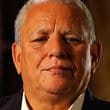
Interviews with Roberto de Miranda
Cuba · Interviewed January 3, 2011
Message to the World
“Let them know that in our minds an in our hearts, above all else, there is forgiveness.”
Transcript
My message would be one of unity. We have to be united. Those who are struggling in many countries around the world must look to Cuba and realize that we’re a captive island made up of imprisoned people. Solidarity is so important for our people that we could never find the words to thank them for what they’ve done. But without their support we can’t go any further. I’d like to thank the countries that have supported us throughout all these years in our struggle against Fidel Castro’s government. That would be my message: one of love, peace, and brotherhood.
I’d like to let people know that those who struggle for human rights in Cuba are not mercenaries. We’re men of the people. We are not trying to overthrow the Cuban government through violent means. Let them know that in our minds and in our hearts, above all else, there is forgiveness. We do not want any bloodshed in our motherland. This is a Cuban problem and it will be resolved by Cubans.
I have a message for Latin American countries that are under dictatorships such as Bolivia, Venezuela, and Nicaragua. Please, I tell these brothers to pay attention, to look at the case of Cuba and how we Cubans lost all our rights — to freedom, to education, all rights. We have lost all rights. This is a pure falsehood about education and public health. Our people lack all these things. We have lost these rights as well, education and health. And these are not the only rights a human being should have. We have other rights. We also have the right to freedom, which is the most precious thing any human being could ever possess.
About Roberto de Miranda
Roberto de Miranda is a former teacher, educational freedom advocate, and prisoner of conscience in Cuba.
Born in the province of Camaguey in 1946, Miranda worked as a mathematics teacher in the 1980s. He was fired from his teaching position by school administrators for his refusal to participate in public political acts and for refusing to pass students who did not earn passing grades. He then co-founded and became the first president of the College of Teachers of Cuba (Colegio de Pedagogos de Cuba), a non-governmental organization that seeks “the de-ideologization of education in Cuba and denounces violations against students and professors who do not share the political ideals of the system.”
Miranda also founded the Félix Varela Independent Library in July 2000 and supported the Varela Project, a nonviolent citizens’ legislative initiative for democratic reforms in Cuba.
In 2003, Miranda was arrested, tried and sentenced to 20 years imprisonment under Article 91 of the Cuban Penal Code, which penalizes “an act with the objective of causing detrimental suffering to the independence of the Cuban state or to the integrity of its territory, in the interest of a foreign state.”
While in prison, Miranda was given the 2003 Pedro Luis Boitel Freedom Award, which is given annually to a Cuban who has displayed courage in nonviolent resistence to the Cuban government. Bulgarian Prime Minister Philip Dimitrov said during the ceremony, “Roberto de Miranda has been dedicated for many years to the promotion of free thought and has made important progress. The Castro regime abhors these types of people because they represent an independent civil society, which is one of the largest threats facing the government.”
Miranda was released from prison in 2010 and immigrated to the United States where he lives in Miami. He continues his work on behalf of freedom and democracy in Cuba.