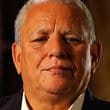
Interviews with Roberto de Miranda
Cuba · Interviewed January 3, 2011
Inspirations for Freedom
Tells how pro-democracy activists teach young people in Cuba about Martin Luther King and Lech Walesa.
Transcript
We have been inspired by many figures who have carried out struggles through civil disobedience, especially people who have fought for human rights, like Dr. Martin Luther King. In our libraries, we teach young people how his struggle was carried out, as well as teaching them about [Lech] Walesa and many others who struggled in Eastern Europe and who are great examples for the Cuban people and for dissidents. How they took to the squares in Poland with small groups of people that later became thousands. That’s our main goal in Cuba, talking to young people – at a bus stop, anywhere we can – and telling them about how these activists succeeded in overthrowing those totalitarian dictatorships in Eastern Europe and the former Soviet Union.
About Roberto de Miranda
Roberto de Miranda is a former teacher, educational freedom advocate, and prisoner of conscience in Cuba.
Born in the province of Camaguey in 1946, Miranda worked as a mathematics teacher in the 1980s. He was fired from his teaching position by school administrators for his refusal to participate in public political acts and for refusing to pass students who did not earn passing grades. He then co-founded and became the first president of the College of Teachers of Cuba (Colegio de Pedagogos de Cuba), a non-governmental organization that seeks “the de-ideologization of education in Cuba and denounces violations against students and professors who do not share the political ideals of the system.”
Miranda also founded the Félix Varela Independent Library in July 2000 and supported the Varela Project, a nonviolent citizens’ legislative initiative for democratic reforms in Cuba.
In 2003, Miranda was arrested, tried and sentenced to 20 years imprisonment under Article 91 of the Cuban Penal Code, which penalizes “an act with the objective of causing detrimental suffering to the independence of the Cuban state or to the integrity of its territory, in the interest of a foreign state.”
While in prison, Miranda was given the 2003 Pedro Luis Boitel Freedom Award, which is given annually to a Cuban who has displayed courage in nonviolent resistence to the Cuban government. Bulgarian Prime Minister Philip Dimitrov said during the ceremony, “Roberto de Miranda has been dedicated for many years to the promotion of free thought and has made important progress. The Castro regime abhors these types of people because they represent an independent civil society, which is one of the largest threats facing the government.”
Miranda was released from prison in 2010 and immigrated to the United States where he lives in Miami. He continues his work on behalf of freedom and democracy in Cuba.