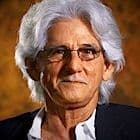
Interviews with Manuel Vázquez Portal
Cuba
Defiance in Prison
Manuel talks about continuing nonviolent resistance in prison.
Transcript
Of course, we started to feel bad. And the first protest we had was on July 26 [2003]. We lost our voices protesting and beating our shoes against the steel that enclosed our cells. The second protest we had was on August 13.
And this continued until the early hours. On August 13… well already the 14th, the officers appeared and of course they were going to punish us for our lack of discipline, for being rowdy against authority. They told us they were going to suspend the “conjugal pavilion.” The conjugal pavilion was a kind of visit of your wife for three hours every five months; the visits were three each at a time. And well, not I, nor Normando [Hernández], Prospero [Gainza Aguero], or Juan Carlos [Herrera Acosta] accepted that they could deny us the pavilion, and so we went and prepared, what I think, was the first hunger strike that was led by [members of] the Group of 75. And perhaps the prison authorities made a mistake and thought that no… we were not going to do it. And from the 30th… from August 31 to September 1,we embarked on a hunger strike.
Sanctions by the European Union towards Cuba were increased. The Group of 75, of course, had been working on a journal since May [2003], that I had smuggled out of the prison secretly and had been published around the world; a journal [published under the title, Written Without Permission] that told all the tragedies of prison life. And the group was becoming well known, already international organizations were helping the group gain attention and preparing ways to grant awards to some of the intellectuals, writers, poets, activists, opponents, in the general sense, that were inside the prison.
Already the Group of 75 was earning a name and the hunger strike was very effective in helping to raise awareness for the group on an international level and it also awakened a little solidarity within the Cuban political prisoners. So of course, the authorities immediately separated us, they dispersed us. Normando Hernández went to Pinar del Rio. I went to another jail in Santiago called Aguadores. Juan Carlos Herrera [Acosta] went to Guantanamo. Nelson Aguiar [Ramirez], I think, also went to Guantanamo. [Normando Hernández, Prospero Gainza Aguero, Juan Carlos Herrera Acosta, and Nelson Aguiar Ramirez are Cuban freedom advocates. From 2003 to 2010, they were prisoners of conscience after their arrest in the Black Spring crackdown that arrested 75 nonviolent dissidents.]
In short, they removed us all, they scattered us… it was the manner in which they thought they were going to silence us. The hunger strike lasted between 11 to 13 days, I do not remember well. With all of us scattered, the strike was less effective than when we were all still in Boniato [prison], and they went on removing us one by one… and isolating the strike… and we returned to the tedious routine of a prisoner in Cuba.
About Manuel Vázquez Portal
Born in 1951, Manuel Vázquez Portal grew up in the early days of the Castro regime. He received a degree in philology and worked for several years as a teacher. Afterward, he served as a literature advisor in the Ministry of Culture and a journalist with a state-owned media outlet. Through his work, he discovered first-hand how the regime used media and literature as propaganda and banned anything that challenged government ideology. Disillusioned with the regime’s censorship, Manuel focused his talents on children’s literature, a field that offered more flexibility for creativity and imagination.
In 1995, Manuel joined an independent news agency called Cuba Press, and in 1998, he helped form a similar organization called the United Workers Group. In 2003, Manuel was arrested along with 74 other nonviolent dissidents as part of a massive government crackdown known as the Black Spring. He was sentenced to 18 years in prison for his criticism of the regime. While incarcerated, Manuel worked with fellow political prisoners to organize protests against the prison guards and hunger strikes.
Also during this time, Manuel smuggled his diary out of prison with its descriptions of the conditions he and fellow prisoners endured; his testimonies were published for the outside world under the title Written Without Permission. The Committee to Protect Journalists presented Manuel the International Press Freedom award in absentia for his efforts to expose the regime’s treatment of political prisoners..
In 2004, Cuban authorities transferred Manuel from prison to a hospital; years of abuse and malnutrition had caused his health to deteriorate. Much to his surprise, Manuel was released and went into exile. He brought his family to the United States where he continues to champion a free and democratic Cuba.