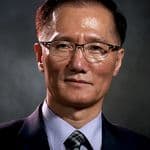
Interviews with Kim Seung-chul
North Korea
Why I Became an Activist
“I realized how precious human life is; not just my own but the lives of other people.”
Transcript
My motivation for becoming a human rights, reform, and liberalization activist can be explained in two ways. First, I was motivated out of affection and respect for human beings.
Second, I was motivated based on my determination to do something for my home country and a need to serve its people.
North Korea is a society where people believe that death can happen easily. The regime can kill you if you do something wrong; either by punishment or getting shot to death. Because this mentality is so prevalent, people do not value human life.
After spending about seven or eight years here in South Korea, I realized how precious human life is; not just my own but the lives of other people. Even today, when meeting defectors who have just crossed the border to the South, I know their mentality. They still have a mindset that thinks little of human life.
Regarding my second motivation, when I was working for the [Institute of North Korean Studies], I had chances to interview many defectors, and they would share their stories. One of them shared a story that took place in the area of Sinuiju in the late 1990s. This was during the period where around 3.5 million North Koreans starved to death.
[In the mid-1990s, North Korea experienced mass famine that resulted in an estimated three million deaths.]
One of this person’s colleagues did not come to work at the factory that day so he visited him at his home. Inside, they did not have a rice cooker or even proper dishes. His colleague, this person who did not come to work, had starved to death in his own house. His seven year old daughter was in the house as well, and she was half dead from starvation. They had this small dining, tea table and on the table, there were ten pieces of popcorn in a small cup. When people woke the daughter up and gave her some water, they asked her, “Why did you not eat the remaining popcorn?” She explained that she had wanted to use the popcorn as food to pay tribute to her father’s death.
I had heard many stories about people starving to death, but this particular story really touched my heart.
I thought to myself, “I am so well off here, and I am leading such a stable life.” When my father was alive, things were okay. About ten years after my father’s death, my family became very poor, because I didn’t have the right kind of songbun or social class.
My wish had always been not to be evaluated based on social class and by authorities, but based on my abilities.
[Songbun is a system used by the North Korean regime to classify citizens’ attitudes toward the regime as core, wavering, or hostile. An individual’s songbun status is influenced by his family’s status and helps determine career prospects, housing and even access to food.]
Now that I have these abilities, I knew that I had to do something for North Korea. I told myself that I would do what I could to the best of my abilities. Because my own thoughts and perceptions had changed after defecting, I was determined to awaken North Korea’s elite. In the past I always felt something was wrong, but I didn’t know exactly how and what was necessary to solve those problems.
That is the reason I started broadcasting.
About Kim Seung-chul
Kim Seung-chul is the founder of North Korea Reform Radio and a passionate advocate for freedom of information. Kim grew up in North Korea where all media is completely controlled by the regime. Desperate for alternative sources of information, he would listen to illegal foreign radio broadcasts targeted at North Koreans. As a result of his exposure to independent media, Kim started questioning his country’s totalitarian system.
Trained as a civil engineer, Kim was selected to work on an international construction project in Siberia. He was amazed at how people in Russia’s most isolated region still had access to basic necessities that were unavailable to many in North Korea. Kim decided to escape and start a new life in South Korea. Once there, he launched shortwave radio programming that targets North Korea’s elite who Kim believes will lead the country’s liberalization. Remembering his own experiences with foreign radio, Kim made it his mission to deliver alternative sources of information to his people and inspire change. As such, North Korea Reform Radio delivers news and programming on leadership, reform, and liberalization that offers elites different perspectives on North Korean society and political philosophy.