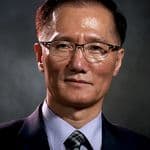
Interviews with Kim Seung-chul
North Korea
What is Freedom?
Kim Seung-chul shares his definition of freedom.
Transcript
Freedom means having the right to do what you want without creating problems for other people and society. So with freedom comes responsibility.
I think people are born with the right to freedom, but because your freedom can be infringed upon by the outside world and by society I think that you have to have some kind of system where you can keep this concept in check to be able to respect others.
Freedom, as I learned about it in North Korea, had symbolic meaning because it meant struggling against oppression and exploitation and it was a purely ideological definition. But here in South Korea, I feel that freedom is about human existence and it also has an individual aspect to it.
I want to emphasize the importance of unique individual characteristics and differences among people when talking about freedom. I was inspired by Erich Fromm’s book titled, To Have or to Be? What communism and socialism try to do is disregard the fact that all human beings are different in their own unique way.
[Erich Fromm (1900 – 1980) was a German social psychologist, sociologist, and philosopher.]
Socialism and communism try to impress upon you that everybody needs to be the same and that is the way to achieve freedom and material wealth. But capitalism shows respect for each person; however, the differences amongst people sometimes create conflict but are also the driving force for advancement.
So in that sense, I could say that freedom is about respecting each individual and their uniqueness.
About Kim Seung-chul
Kim Seung-chul is the founder of North Korea Reform Radio and a passionate advocate for freedom of information. Kim grew up in North Korea where all media is completely controlled by the regime. Desperate for alternative sources of information, he would listen to illegal foreign radio broadcasts targeted at North Koreans. As a result of his exposure to independent media, Kim started questioning his country’s totalitarian system.
Trained as a civil engineer, Kim was selected to work on an international construction project in Siberia. He was amazed at how people in Russia’s most isolated region still had access to basic necessities that were unavailable to many in North Korea. Kim decided to escape and start a new life in South Korea. Once there, he launched shortwave radio programming that targets North Korea’s elite who Kim believes will lead the country’s liberalization. Remembering his own experiences with foreign radio, Kim made it his mission to deliver alternative sources of information to his people and inspire change. As such, North Korea Reform Radio delivers news and programming on leadership, reform, and liberalization that offers elites different perspectives on North Korean society and political philosophy.