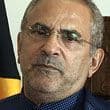
Interviews with Jose Ramos-Horta
East Timor · Interviewed January 8, 2010
Personal Motivation
"My motivation was always my sense of what is fair, what is not fair, what is just, what is unjust.”
Transcript
I was born here in Timor-Leste– spend– the following 24 years more or less here, with only two years abroad in Mozambique as an exile because of my untied Portuguese colonial– rhetoric. But I came back in 1971 and– became even more– politically critical of the Portuguese colonial rule. I was going to be deported again or exiled– in 1974. But before I actually was going to leave East Timor– Portuguese East Timor at that time– the Carnation Revolution took place in Portugal, April 25th, 1974, which toppled the Portuguese colonial regime, paved the way for democracy in Portugal, independence for the colonies and for Timor-Leste.
So, I didn´t have to leave. I then– joined with– my compatriots like Nikolai Olivatu (PH), Shaveat Rumadal (PH), Mari Alkatiri, Abede Wadaouzu (PH), Obuzat Olivatu (PH), Justine Nomata (PH), many others, in establishing the Social Democratic Party, later FRETILIN.
My motivation was always– as a child, as a teenager– my sense of what is fair, what is not fair, my se– sense of what is just, what is unjust. So– the– what motivate me most in anything that I do, my sense of fairness, of justice– of– of freedom of people´s– individual freedom, people´s dignity. So, that´s why I got involved in the struggle for self-determination and independence for Timor-Leste.
About Jose Ramos-Horta
José Manuel Ramos-Horta was the president of East Timor (Timor-Leste) from 2007 to 2012. In 1996, he was awarded the Nobel Peace Prize for his advocacy of human rights and self-determination for the Timorese people.
Born in Dili in 1949 to a Portuguese father and a Timorese mother, Ramos-Horta was educated in Catholic schools and became a journalist. His articles advocating independence for the territory led to his deportation at the age of 18. He returned to Timor in 1971 and, after the 1974 revolution in Portugal, joined with other young Timorese pro-independence activists to found the Social Democratic Association of Timor, later known as the Revolutionary Front of Independent Timor-Leste (FRETILIN). When FRETILIN declared the independence of East Timor in 1975, Ramos-Horta was appointed the minister of external affairs and was instructed to go abroad to seek international recognition and support. He was just 25 years old.
Ramos-Horta left East Timor three days before the invasion by Indonesian troops that led to a 24-year occupation. A few days later, he became the youngest diplomat ever to address the United Nations Security Council, successfully urging the Council to adopt a resolution that recognized the right of the people of Timor-Leste to self-determination and independence.
After the 1999 referendum in which the people of East Timor voted overwhelmingly for independence from Indonesia, Ramos-Horta returned to his homeland for the first time in 24 years. He served as foreign minister under the provisional United Nations administration (2000–2002) and during the first four years of independence (2002-06), and was selected as prime minister after the political and social crisis that led to the resignation of the first government in 2006. In 2007 he was elected president of the Republic, receiving over 70 percent of the votes cast.
On February 11, 2008, Ramos-Horta was shot twice and severely wounded. Evacuated to Australia, he remained for 10 days in an induced coma and spent several months recovering from his injuries. Upon his return to Dili, he was received in triumph by an estimated 100,000 people of all ages, walks of life, and political perspectives.
After initially stating he would not seek reelection, Ramos-Horta decided to run as an independent candidate. He placed third in the balloting. In 2013, he was named the United Nations Special Representative to Guinea-Bissau.