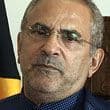
Interviews with Jose Ramos-Horta
East Timor · Interviewed January 8, 2010
International Presence
The international presence in East Timor during the Indonesian occupation.
Transcript
Following the invasion in 1975, all the– international– presence here that was already extremely limited anyway– actually 1975, on the eve of the invasion, we had few members of International Committee of Red Cross here. But they, too, were forced to leave before the invasion because Indonesia refused to give them any guarantees of safety.
So, Timor-Leste became one of the countries in the world that was most cut off– a bit like Cambodia when the Khmer Rouge took over, when they began to empty Phnom Penh of everyone, anyone. So– a few years later– the International Committee of Red Cross was able to return.
UNICEF was able to do some work in the country. Some– international NGOs were able to come, like the U.S. Catholic Relief Services. And slowly, gradually– some– other– international– institutions were able to provide some assistance to NGOs in Timor-Leste. The Norwegians– Swedish or the Canadians supported some local NGOs or some church– NGOs.
I, personally, yes, lobbied very hard to have a U.N. presence here. I lobbied the U.N. There were resolutions that were drafted by me that passed in the U.N. to have a UNHR, UNICEF, UNDP. Anything, you name it, I wanted them here. Even when I was asked by foreign governments, like the Swedish or the Norwegians or the Canadians, about whether– they should support certain institutions here, I was always in favor.
Probably some of the Timorese NGOs don´t know– like ETAN. But I was one of those who argued for support to them. Swaratimori (PH) now, which is– back then was– you know, a lousy newspaper– very pro-Indonesia. But I told, “No, support them.” Any Timorese institution, I supported. Because my argument was, “Regardless whether Timor is going to be free or not, regardless whether Timor is going to be independent or fully integrated in Indonesia, the Timorese people, to survive, either as an independent country or survive within Indonesia, have to be supported.”
Like, I encouraged people to come– foreigners to come, tourists to come, visitors, media. So, I was never in favor of– boycotting completely– Timor-Leste because of Indonesian occupation. And– I was right then, and I´m right– today. You know– I give even an example, you know. When I won the Nobel Peace Prize in ´96, I arrive in– Norway, the main issue on my arrival at the airport from the media was whether I was in favor of not– of– Norwegian oil company, Statoil, operating in the Timor Sea. They were there.
And– I said to the media, “I will talk with them tomorrow. We will discuss this issue. And I will tell you what I feel.” I met with the oil company the following day, Statoil. And they told me, “As you know, we are in your hands. The public here will listen to you. And whatever you say, we will follow. If you want us to leave, we will leave.”
I asked them questions. I asked them, “When are you going to know– to start operating commercially?” Because they were start– just exploring. “Oh,” they said, “you know– we don´t know. Even if we find gas and oil, it will take six to seven years before we can produce.” I said, “Then continue. Don´t leave. Long before that, we´ll be independent. Because if you leave now, we are– independent, then they have to start all over again. So, continue. The only thing I ask you, give us some scholarship for our students.”
And they gave $500,000 for– scholarships– that late, it was not implemented immediately, was implemented only, I think, in ´97, through the Norwegian Embassy in Jakarta and through Timor Aid — together with a Norwegian NGO. And one Timorese woman, called Allashandra Race (PH)– she was living in Portugal– she was the first beneficiary. And she got her first Master´s Degree in Petroleum Economics in Norway from this– scholarship.
So, I was very– pragmatic. There was some radical Norwegian NGOs who were also against, for instance, the Norwegians financing a geological mapping of the whole of Indonesia, including Timor-Leste. I met then with the secretary of state, foreign affairs, of Norway, Jurg Eglin — later became a very big– undersecretary general at the U.N.
And– I told him, “No, go ahead. I– what I w– want is when you finish it, give me a copy of that– g– geological map of Timor-Leste. Because we will need it in the future.” So, my– philosophy, tactics, are always flexible, pragmatic. You cannot fight a struggle with dogmatism.
About Jose Ramos-Horta
José Manuel Ramos-Horta was the president of East Timor (Timor-Leste) from 2007 to 2012. In 1996, he was awarded the Nobel Peace Prize for his advocacy of human rights and self-determination for the Timorese people.
Born in Dili in 1949 to a Portuguese father and a Timorese mother, Ramos-Horta was educated in Catholic schools and became a journalist. His articles advocating independence for the territory led to his deportation at the age of 18. He returned to Timor in 1971 and, after the 1974 revolution in Portugal, joined with other young Timorese pro-independence activists to found the Social Democratic Association of Timor, later known as the Revolutionary Front of Independent Timor-Leste (FRETILIN). When FRETILIN declared the independence of East Timor in 1975, Ramos-Horta was appointed the minister of external affairs and was instructed to go abroad to seek international recognition and support. He was just 25 years old.
Ramos-Horta left East Timor three days before the invasion by Indonesian troops that led to a 24-year occupation. A few days later, he became the youngest diplomat ever to address the United Nations Security Council, successfully urging the Council to adopt a resolution that recognized the right of the people of Timor-Leste to self-determination and independence.
After the 1999 referendum in which the people of East Timor voted overwhelmingly for independence from Indonesia, Ramos-Horta returned to his homeland for the first time in 24 years. He served as foreign minister under the provisional United Nations administration (2000–2002) and during the first four years of independence (2002-06), and was selected as prime minister after the political and social crisis that led to the resignation of the first government in 2006. In 2007 he was elected president of the Republic, receiving over 70 percent of the votes cast.
On February 11, 2008, Ramos-Horta was shot twice and severely wounded. Evacuated to Australia, he remained for 10 days in an induced coma and spent several months recovering from his injuries. Upon his return to Dili, he was received in triumph by an estimated 100,000 people of all ages, walks of life, and political perspectives.
After initially stating he would not seek reelection, Ramos-Horta decided to run as an independent candidate. He placed third in the balloting. In 2013, he was named the United Nations Special Representative to Guinea-Bissau.