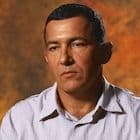
Interviews with Fidel Suarez Cruz
Cuba
The Black Spring
The 2003 crackdown on the Cuban opposition.
Transcript
For those who do not know about the Black Spring, from March 18 through 21, 2003, more than 70 Cuban opposition members were arrested. Seventy-five opposition members, 74 men and 1 woman, were punished. The woman is Martha Beatriz Roque Cabello. The opposition members came from different backgrounds – journalists, librarians. I was a librarian in Cuba. The “street dissidents,” [those taking part in] demonstrations in the street. I also partook in various forms of opposition acts.
It was not a surprise. [In those days,] I was being arrested every Wednesday at dawn. This was a time with public street demonstrations across the country demanding the release of all political prisoners, without sending them into exile. So, a majority of the opposition was detained. It was on Wednesday, March 18, 2003. The Black Spring was hidden. People learned about the Black Spring over a period of months, even years.
The first to learn of it were the prison populations. That is where we [dissidents] started to come together, in all these prisons. These ordinary [non-political] prisoners were the ones who provided the information to their families, then later because of the Ladies in White [Damas de Blanco], various documents, Radio and TV Martí, La Voz de La Fundación [radio] – stations that send their signal to certain provinces in Cuba – until it became widely – if not universally – known.
About Fidel Suarez Cruz
Fidel Suarez Cruz was born in 1970 in the small village of Manuel Lazo in Cuba’s Pinar del Rio Province. As a young man, he began to question the policies of Cuba’s communist government. In 1994, Fidel became active in the nonviolent opposition, including the Máximo Gómez Human Rights Front and the Human Rights Front Affiliated with the Andrei Sakharov Foundation. He also established and ran an independent library in his hometown. Fidel was detained on numerous occasions and was branded a violent criminal by the state.
On March 19, 2003, Fidel was arrested, along with 74 other nonviolent opposition activists (the Group of 75) in the crackdown known as the Black Spring. In a summary judicial proceeding, he was sentenced to twenty years in prison. He served time with common criminals in maximum security prisons in Matanzas and Pinar del Río. Like other prisoners of conscience, he suffered brutal treatment and was physically and psychologically tortured, including long periods of solitary confinement. In 2005, he was subjected to nineteen beatings within a four month period, causing him many permanent health problems.
Fidel’s family also suffered during his imprisonment. The regime sent many of the Group of 75 to prisons that were distant from their hometowns and families. Fidel’s relatives would travel hundreds of kilometers to visit him in prison, but were sometimes denied permission to see him. When Fidel was first imprisoned his son was only fourteen days old. Fidel’s wife joined other female relatives of the Group of 75 prisoners of conscience in establishing the Ladies in White (Damas de Blanco), conducting vigils and other activities to raise awareness of the Group of 75 and press for their release.
After more than seven years in prison, Fidel Suarez and the other Group of 75 prisoners were released in an agreement negotiated between the Roman Catholic Church and the governments of Cuba and Spain. On October 6, 2010, Fidel was released from prison and exiled to Spain with his son Jeferson (named for the American president), his mother Candelaria Cruz, and his wife Aniley Puentes, a member of the Ladies in White movement.
In 2011, he moved to the United States, where he and his family live in the city of Hialeah, Florida. He currently works in landscaping and remains active in the movement for Cuban freedom.