Interviews with Fidel Suarez Cruz
Cuba
Challenges for the Opposition
“It is a very long, tiresome struggle.”
Transcript
The biggest challenge is psychological repression. Physical repression is fleeting. You get beatings today, others tomorrow. But psychological repression is every day. Material shortages. An opposition member who has one, two, three children, no matter how much willpower or intent he may have to enter or continue in opposition, he must think about his family.
That his children are crying for a glass of milk can make any person cry. They do not have a pair of shoes. They do not have food to take to school. They don’t have much for breakfast. So what will that male or female opposition member do? That´s one of the great challenges. The other major challenge is communication. Communication is necessary to be an opposition. The regime confiscates cell phones when they please.
Movement within the country – if an opposition member has a car. The fact that you have a car does not mean that you go to an event when you feel like it. It is when you are allowed to leave or when you find a way to escape. It is a bit difficult, because they usually surround you as if you’re on a field of battle. The economic costs are very important. Everything is based on that. Economic deprivation or lack of family warmth. A family becomes fragmented because of those things.
It is a very long, tiresome struggle. A human being can achieve the goal, but once it’s achieved the human being no longer exists. He is physically and mentally shattered. The peaceful opposition consists of several groups. They are called peaceful because they do not want to seize power by force. To the contrary, as Martin Luther King said, it is to convince the opponent. To convince the opponent is very hard for the reasons I have already given. [“There are certain things we can say about this method that seeks justice without violence. It does not seek to defeat or humiliate the opponent but to win his friendship and understanding,” Rev. Martin Luther King, Jr., “Justice Without Violence,” April 3, 1957]
They really need resources but also leadership. There are leaders there. But what they need is to unite more, come together more and try to form one group. A common group to achieve what they really want – change. When you’ve achieved the change, then everyone goes his own way – his party, his belief, to what he understands. But the first objective is overthrowing the Castro tyranny.
About Fidel Suarez Cruz
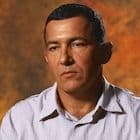
Fidel Suarez Cruz was born in 1970 in the small village of Manuel Lazo in Cuba’s Pinar del Rio Province. As a young man, he began to question the policies of Cuba’s communist government. In 1994, Fidel became active in the nonviolent opposition, including the Máximo Gómez Human Rights Front and the Human Rights Front Affiliated with the Andrei Sakharov Foundation. He also established and ran an independent library in his hometown. Fidel was detained on numerous occasions and was branded a violent criminal by the state.
On March 19, 2003, Fidel was arrested, along with 74 other nonviolent opposition activists (the Group of 75) in the crackdown known as the Black Spring. In a summary judicial proceeding, he was sentenced to twenty years in prison. He served time with common criminals in maximum security prisons in Matanzas and Pinar del Río. Like other prisoners of conscience, he suffered brutal treatment and was physically and psychologically tortured, including long periods of solitary confinement. In 2005, he was subjected to nineteen beatings within a four month period, causing him many permanent health problems.
Fidel’s family also suffered during his imprisonment. The regime sent many of the Group of 75 to prisons that were distant from their hometowns and families. Fidel’s relatives would travel hundreds of kilometers to visit him in prison, but were sometimes denied permission to see him. When Fidel was first imprisoned his son was only fourteen days old. Fidel’s wife joined other female relatives of the Group of 75 prisoners of conscience in establishing the Ladies in White (Damas de Blanco), conducting vigils and other activities to raise awareness of the Group of 75 and press for their release.
After more than seven years in prison, Fidel Suarez and the other Group of 75 prisoners were released in an agreement negotiated between the Roman Catholic Church and the governments of Cuba and Spain. On October 6, 2010, Fidel was released from prison and exiled to Spain with his son Jeferson (named for the American president), his mother Candelaria Cruz, and his wife Aniley Puentes, a member of the Ladies in White movement.
In 2011, he moved to the United States, where he and his family live in the city of Hialeah, Florida. He currently works in landscaping and remains active in the movement for Cuban freedom.