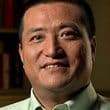
Interviews with Fang Zheng
China · Interviewed February 7, 2010
Tiananmen Square
“On June 4th, I was at Tiananmen Square . . . . The tank was chasing behind us. Finally it ran over me and cut off both my legs.”
Transcript
My name is Fang Zheng. I was a college student in Beijing in 1989. I was a senior student of Physical Education at Beijing Institute.
In 1989, I participated in a student campaign that originated in Beijing, then it developed to a democracy movement to protest against the government.
On June 4th, I was at Tiananmen Square the whole day. During the evacuation in the evening on that day, when the military troops suppressed the demonstration when I was leaving the square, I was attacked by a Liberation Army tank, was attacked by the tank, which caused serious injuries. The tank was chasing behind us. Finally it ran over me and cut off both my legs.
I know, at that time, on June 4, 1989, from June 3rd to June 4th, in the entire city of Beijing, there were many people who were suppressed by the military troops. They lost their lives. There were more people like me, who got injured and maimed.
I experienced that suppression, and I am also a witness and a survivor of it.
About Fang Zheng
Fang Zheng was a college student in Beijing in 1989 when he participated in the pro-democracy demonstrations in Tiananmen Square. As the military moved to suppress the demonstrations on June 4, 1989, he was run over by a tank and both of his legs were crushed and had to be amputated.
Fang refused to sign a government-written statement that he had lost his legs in an ordinary road accident. He was denied a college degree. Once a champion runner, he now devoted himself to wheelchair athletics, breaking two Asian records at the 1992 All-China Disabled Athletic Games. However, the government refused to allow him to participate in international competitions or in further competition within China.
Fang spoke frequently to international news media about the human rights situation, and particularly about the government’s refusal to acknowledge what it had done at Tiananmen Square. He was repeatedly denied the right to travel overseas, but he was finally allowed to leave China in 2008 amid widespread interest in his case among international news media covering the Beijing Olympics.