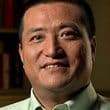
Interviews with Fang Zheng
China · Interviewed February 7, 2010
One-Child Policy
How China’s population control policies disregard the dignity of women and the value of human beings.
Transcript
China’s one-child construction, one-child policy, has been implemented for many years. At the beginning, people would feel they had no choice but to accept it. There was also some propaganda. However, I think that during the implementation of the policy, China in fact did something very wrong.
Because we believe it is a typical human rights infringement issue, during which there has been a significant amount of wanton disregard of human rights, including disregard of women’s dignity, which is like so many other problems in China, as I have mentioned. Including the June 4th massacre [at Tiananmen Square, 1989], which is all about the Chinese Communist Party’s disregard for the value of human beings and disrespect of people during the course of the so-called birth-control policy, which is to impose the one-child policy. The one-child policy is a kind of disregard of the value of human beings as well as an infringement of human rights.
As we know, there have been many, many tragedies during the implementation of the one-child policy. There are lots of voices of discontent among the people.
About Fang Zheng
Fang Zheng was a college student in Beijing in 1989 when he participated in the pro-democracy demonstrations in Tiananmen Square. As the military moved to suppress the demonstrations on June 4, 1989, he was run over by a tank and both of his legs were crushed and had to be amputated.
Fang refused to sign a government-written statement that he had lost his legs in an ordinary road accident. He was denied a college degree. Once a champion runner, he now devoted himself to wheelchair athletics, breaking two Asian records at the 1992 All-China Disabled Athletic Games. However, the government refused to allow him to participate in international competitions or in further competition within China.
Fang spoke frequently to international news media about the human rights situation, and particularly about the government’s refusal to acknowledge what it had done at Tiananmen Square. He was repeatedly denied the right to travel overseas, but he was finally allowed to leave China in 2008 amid widespread interest in his case among international news media covering the Beijing Olympics.