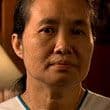
Interviews with Cynthia Maung
Burma · Interviewed January 8, 2010
Health Care and Human Rights
How advocacy efforts have enhanced her clinic’s ability to help refugee children.
Transcript
Since we arrive to the border, we are from the health background, so whatever we need we start to provide services. So until 1991 or 1995 or 1997, we are working a lot for service provision and to train the new health workers. But gradually we realize that even providing services is not enough for us because there are always more and more patients come to us, and more problems come out from Burma. So we need to strengthen our advocacy work, especially try to stop human rights violation inside Burma. All the problems we identify because of the human rights violation inside Burma. But usually in our training curriculum, or training materials, or with the trainer, mostly are medical personnel.
So we start [to] invite many other human rights organizations, like Human Rights Education Institute of Burma, and some organization like woman organization to train about the gender issue or gender-based violence. So we start working with woman groups, youth groups, and human rights groups to get more understanding the broader picture of the situation in Burma. And in 1998, we establish the cross-border health program: we call, like, back pack health worker team. So through this back pack health worker team program, one of our services or program is that we also do documentation work for human rights – what is the impact of human rights violation on health. So in 2004, we [were] able to publish a book called Chronic Emergency book. So it highlights the impact of human rights violation on health: like higher infant mortality or malnutrition rate because of the forced relocation, forced labor, and food destruction by the military.
At the same time, gradually while we are in Thailand, we ourself, like the children who were born at the clinic or the staff, we are always at risk of threats like deportation and arrest because we don’t have any legal documents. And the children who we deliver at the clinic never receive official delivery certificate. So we are getting more and more concerned about the future of these children. And so in 2003, we start form an organization called Committee for Protection and Promotion of Child Rights. So it’s to highlight the stateless issue. So as soon as we start provide services and training for Thai rights, we have seen more and more problems inside Burma and here because many children show up and many families show up, many [with] no documentation. Even they never have ID card, or the children who are already 15 years old, never have delivery certificate. And so it’s a lot of barrier for them, or a lot of restriction for them to move around.
So if they don’t have ID card they cannot move freely, even inside Burma. And people who don’t have ID card cannot continue their education. So different issues come out through this network. So for us, right now, we very much focus our effort on the children. Like having birth registration is one big issue, and then how to improve access to education in Thailand, or also how to help the children in IDP [internally displaced persons] area to improve access to education.
About Cynthia Maung
Cynthia Maung is a refugee from Burma who established a world-renowned clinic near the Thai-Burma border for her fellow refugees, as well as for internally displaced persons within Burma.
Dr. Cynthia, as she is known, was born into an ethnic Karen family in Rangoon in 1959. After finishing medical school, she moved to a village in Karen State where she served as a doctor for poor people of several ethnic groups. When the military seized power in 1988 and began cracking down on pro-democracy activists, she was among thousands who fled to the jungle. Like many of the others, she eventually made it across the Thai-Burma border.
At first, Dr. Cynthia worked at a small hospital in Thailand treating those who were fleeing the fighting inside Burma. In 1989, after consulting with residents of refugee camps along the border about the medical needs of refugees and internally displaced persons , she established her clinic in a dilapidated building with bare dirt floors on the outskirts of Mae Sot. Her makeshift clinic had few supplies and almost no money, but she improvised by sterilizing her few instruments in a rice cooker and soliciting medicine and food from Catholic relief workers. Today, Dr. Cynthia’s clinic treats more than 75,000 patients each year.