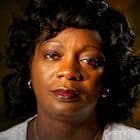
Interviews with Berta Soler
Cuba
Life in Cuba
“In Cuba, you don’t really live. You survive.”
Transcript
In Cuba, you do not really live, you survive.
The typical Cuban goes through a lot. The Cuban government has buried the Cuban people in misery and need. The Cuban doesn’t have a decent home. He doesn’t have adequate food, as every human being should have, because there isn’t enough food in Cuba. Transportation is awful because most do not own cars. The bus… sometimes transportation is held up. Cubans do not go out to work or produce. They go out to steal to be able to survive in Cuba.
It is what the common Cuban citizen has learned from the government and the system. There is overcrowding. It is as if Cuba has gone through a world war. You do not know whether to walk on the sidewalks or in the street, because the facades of buildings could collapse at any moment.
Drinking water is awful in Cuba. We can go up to five days without water. Also there are bad problems with electricity. It’s awful. Living conditions are really awful, really bad. The government does not care. All it cares about is staying in power while it misgoverns the people.
Cuban Communist Party members are very committed. Perhaps some of the leaders lead better lives than the rest. Those of the Ministry of Interior have it better than those of the Revolutionary Armed Forces because the government gives them privileges, just like they do those who work in the tourism industry. Those working in tourism also receive bundles of goods and earn 10 CUC. State Security agents of the Ministry of Interior and those of the Revolutionary Armed Forces also receive more money.
[The Cuban convertible peso (CUC) is one of Cuba’s two official currencies; the other, which is more widely used by average citizens, is the Cuban peso (CUP). The CUC is pegged to the U.S. dollar and worth 25 times as much as the CUP. The average salary in Cuba ranges between 400 and 700 CUP per month.]
About Berta Soler
Berta Soler Fernández was born in Cuba in 1963. She studied microbiology and became a hospital technician in Havana. In 1988, Berta married Angel Moya Acosta, an opposition activist who became one of 75 nonviolent dissidents arrested during the March 2003 crackdown known as the Black Spring.
Berta’s activism began after Cuban authorities imprisoned her husband in 2003. Joining with other spouses and family members of the Black Spring prisoners, she became a founding member of an organization called the Ladies in White (Damas de Blanco) that demanded the release of their loved ones and advocated for greater civil liberties in Cuba.
In October 2004, the Ladies in White staged protests in front of the Communist Party’s headquarters in Revolution Square, pressuring the government to allow Berta’s husband to undergo surgery for a herniated disc. The protest went on for two days until the regime permitted Angel’s operation.
Berta was a central figure in orchestrating the release of her husband and other Black Spring political prisoners. The Ladies in White lobbied Cardinal Jaime Ortega, the leading representative of the Roman Catholic Church in Cuba, and convinced him to negotiate for the release of the prisoners. By 2011, after years of protests, the Black Spring dissidents, including Berta’s husband, were released. While the majority of the prisoners went into exile, Berta and Angel chose to remain in Cuba.
In 2005, the European Parliament awarded the Ladies in White its Sakharov Prize for Freedom of Thought. Berta, along with the other representatives of the organization, planned to receive the honor in person. However, the Cuban government denied them passports and they were unable to attend the ceremony. In 2013, after the regime had relaxed its repressive travel restrictions, Berta received permission to leave the island and led a delegation to accept the 2005 Sakharov Prize on behalf of the Ladies in White.
In 2011, Berta assumed the leadership of the Ladies in White following the death of the organization’s co-founder, Laura Pollan. She continues the struggle for a free and democratic Cuba.