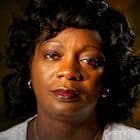
Interviews with Berta Soler
Cuba
Impact of Technology
“The Cuban government is always listening.”
Transcript
First, I want to say that with respect to technology the [government] has access to fiber optics that the common Cuban citizen does not have. This comes directly to the Cuban Government and their people. We have nothing to do with it.
We must thank the U.S. Interests Section, the Czech Embassy, and the Swiss Embassy that have opened their doors to us so that we can communicate abroad. The Internet in Cuba is very closed. Now it costs 4.50 CUC an hour in the cybercafés. Cubans do not have the money to go there.
[The Cuban convertible peso (CUC) is one of Cuba’s two official currencies; the other, which is more widely used by average citizens, is the Cuban peso (CUP). The CUC is pegged to the U.S. dollar and worth 25 times as much as the CUP.]
With respect to cell phone technology, for us it has been a very good thing. Not all of the human rights activists have them; and even those of us that do, when we are detained the State Security agents throw them to the floor and break them.
It’s good because we know we can call each other and find out what is occurring in the east and in the west, even though the Cuban government is always listening to every conversation. It is also very important that by way of Radio Marti, we can listen to what is happening in different … La Poderosa [Radio] – many programs – Radio Republica, by way of many programs we can know what is happening inside Cuba.
We are fighting so that the Cuban people have Internet access like all of the countries in the world with advanced technology. We are lacking a lot, as if we were a third world country.
About Berta Soler
Berta Soler Fernández was born in Cuba in 1963. She studied microbiology and became a hospital technician in Havana. In 1988, Berta married Angel Moya Acosta, an opposition activist who became one of 75 nonviolent dissidents arrested during the March 2003 crackdown known as the Black Spring.
Berta’s activism began after Cuban authorities imprisoned her husband in 2003. Joining with other spouses and family members of the Black Spring prisoners, she became a founding member of an organization called the Ladies in White (Damas de Blanco) that demanded the release of their loved ones and advocated for greater civil liberties in Cuba.
In October 2004, the Ladies in White staged protests in front of the Communist Party’s headquarters in Revolution Square, pressuring the government to allow Berta’s husband to undergo surgery for a herniated disc. The protest went on for two days until the regime permitted Angel’s operation.
Berta was a central figure in orchestrating the release of her husband and other Black Spring political prisoners. The Ladies in White lobbied Cardinal Jaime Ortega, the leading representative of the Roman Catholic Church in Cuba, and convinced him to negotiate for the release of the prisoners. By 2011, after years of protests, the Black Spring dissidents, including Berta’s husband, were released. While the majority of the prisoners went into exile, Berta and Angel chose to remain in Cuba.
In 2005, the European Parliament awarded the Ladies in White its Sakharov Prize for Freedom of Thought. Berta, along with the other representatives of the organization, planned to receive the honor in person. However, the Cuban government denied them passports and they were unable to attend the ceremony. In 2013, after the regime had relaxed its repressive travel restrictions, Berta received permission to leave the island and led a delegation to accept the 2005 Sakharov Prize on behalf of the Ladies in White.
In 2011, Berta assumed the leadership of the Ladies in White following the death of the organization’s co-founder, Laura Pollan. She continues the struggle for a free and democratic Cuba.