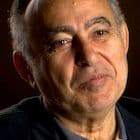
Interviews with Bahey El Din Hassan
Egypt
Vision for Egypt
“There is a serious political vacuum.”
Transcript
I wish that Egypt of ten years would have consolidated political parties. We don´t have up till now, and therefore it was not easy for what´s called the revolutionary political groups to be in power after [Former Egyptian President Hosni] Mubarak stepped down. There is a serious political vacuum. And therefore, it would take long time to build serious dynamic and militant creative political parties. It also would take time for the Egyptian people to learn more that technical democracy is not a golden solution. And they should fight for keeping and respecting the democratic values and the human rights values. And without that they would celebrate again, or bring again Mubarak regime.
So I guess, or I hope, in ten years’ time Egypt can start the building up of a democratic country. But I expect that this would be after a lot of suffering. It would be a learning process, but very tough learning process for the Egyptians. And in this regard, the attitude of the international community can contribute to the extension of such a painful transition period or to make it shorter.
About Bahey El Din Hassan
Bahey El Din Hassan is an Egyptian human rights activist who has worked tirelessly to promote human rights culture in his native Egypt and throughout the Arab world.
Prior to the Egyptian revolution that toppled Hosni Mubarak’s government, Hassan, a professional journalist, was an ardent advocate for freedom of the press. Through this activism, he became more interested in the importance of educating others on human rights. In 1983, he joined the Arab Organization for Human Rights and two years later helped establish an offshoot group called the Egyptian Organization for Human Rights (EOHR). Over the years, the Egyptian government cracked down on EOHR’s work, arresting and torturing several of the organization’s members and stripping its status as a legally registered entity. Despite the threat of violence or arrest, Hassan and others helped EOHR to endure and continued to strengthen Egypt’s human rights movement.
In 1993, Hassan co-founded the Cairo Institute for Human Rights (CIHRS), an independent NGO that promotes human rights and democracy in the Arab region. Today, Hassan serves as the Director of CIHRS. Through these various organizations, Hassan has played a role in educating a new generation of young Egyptians on the importance of embracing a universal code of human rights that encourages freedom and dignity for all people.
In the aftermath of the Arab Spring, Hassan continues his efforts to strengthen human rights education in Egypt and the greater Arab world. Hassan argues that the fall of Hosni Mubarak’s regime was only the beginning, and that Egyptians must cultivate a democratic tradition, bolstered by a robust civil society, that respects human rights in order to be successful. As a journalist, lecturer, and author, Hassan educates audiences in the Middle East and North Africa on human rights, democratic transformation in the Arab world, and the challenges facing human rights defenders throughout the region.