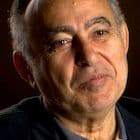
Interviews with Bahey El Din Hassan
Egypt
Repression
How the regime repressed human rights organizations.
Transcript
Several human rights organizations were born or founded by some active members from this organization [the Egyptian Organization for Human Rights]. After a couple of years, I was elected as a secretary general of this mother organization. And in that time, it was a very critical period for this organization because the government was very tough and asked the organization to shut down it refused to recognize that it has a legal status or the right to operate and function. But we decided to continue and we were ready to pay the price.
And we paid this price later on, by 1989; two members of my board were arrested and subjected to torture. Later on, also on 1991, another member of my board was arrested and subjected to more severe torture. But because of the militancy of this organization and its members’ support, it was able to survive, continue and has support from the Egyptian society for it because even without having any legal status, this organization succeeded to have a legal status just in 2002, which means that it continued to operate without any legal permission for almost 17 years.
I was talking only at how was the first years, how it was very difficult and it was very challenging for the human rights movement and this mother organization. But later on, it continues. Another secretary general of the Egyptian Organization for Human Rights year 1989 was arrested but not subjected to torture. On the occasion of a report about sectarian violence against Copts [Copts are the largest Christian group in Egypt and comprise about 10 percent of the population.] was released by this organization in that time, some other members here and there were arrested, but not tortured.
Two organizations were shut down just a couple of years ago, but because of the solidarity campaign by the Egyptian human rights community and the international human rights community, so the government has to allow them to operate again. This is before the revolution. All the time– beginning by at least maybe through the last decade, all the time, there was a consistent and continuous defamation campaign by the governmental media against the human rights initiatives, which introduced them to the public that they are working as agents against the national security of the country. And that they received funding just to do harm to the national interest.
This is all the time to help to create an environment which could be silent when the human rights defenders or groups were harassed. Unfortunately such a campaign still continues after the revolution, and more severe even than under the [Former Egyptian President Hosni] Mubarak regime. Some volunteers or human rights workers who want to work full time and they do other jobs, they are subjected to harassment in their workplaces, to some pressures. Telephones, emails, faxes, this is all the time. And up till now, after the revolution we are sure hundred percent that still it is under close monitoring by the security [services].
About Bahey El Din Hassan
Bahey El Din Hassan is an Egyptian human rights activist who has worked tirelessly to promote human rights culture in his native Egypt and throughout the Arab world.
Prior to the Egyptian revolution that toppled Hosni Mubarak’s government, Hassan, a professional journalist, was an ardent advocate for freedom of the press. Through this activism, he became more interested in the importance of educating others on human rights. In 1983, he joined the Arab Organization for Human Rights and two years later helped establish an offshoot group called the Egyptian Organization for Human Rights (EOHR). Over the years, the Egyptian government cracked down on EOHR’s work, arresting and torturing several of the organization’s members and stripping its status as a legally registered entity. Despite the threat of violence or arrest, Hassan and others helped EOHR to endure and continued to strengthen Egypt’s human rights movement.
In 1993, Hassan co-founded the Cairo Institute for Human Rights (CIHRS), an independent NGO that promotes human rights and democracy in the Arab region. Today, Hassan serves as the Director of CIHRS. Through these various organizations, Hassan has played a role in educating a new generation of young Egyptians on the importance of embracing a universal code of human rights that encourages freedom and dignity for all people.
In the aftermath of the Arab Spring, Hassan continues his efforts to strengthen human rights education in Egypt and the greater Arab world. Hassan argues that the fall of Hosni Mubarak’s regime was only the beginning, and that Egyptians must cultivate a democratic tradition, bolstered by a robust civil society, that respects human rights in order to be successful. As a journalist, lecturer, and author, Hassan educates audiences in the Middle East and North Africa on human rights, democratic transformation in the Arab world, and the challenges facing human rights defenders throughout the region.