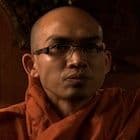
Interviews with Ashin Issariya
Burma · Interviewed January 8, 2010
Communicating Under Repression
Discusses how the democracy movement uses old and new technologies to communicate with the people of Burma.
Transcript
It was very difficult inside to use the Internet, because the military regime control all connections. And also when I’m inside at the time, when I want to open an attached file, at the time I cannot open, because very delay and very slowly. And sometimes we cannot open it. We cannot use the Internet. Okay, denied. Access denied. We always see like that. And political site, we cannot. We only use the browsing and at the time very, very difficult to use it. Sometimes two hour, we can use only the 30 minutes Internet. Very, very difficult. But we do it. Technology is very important for our country.
Yeah, when I’m inside at the time I publish very secretly to hand to hand, and it stick everywhere. I write for an article at the time; I share to them very secretly. A lot of people read about my poem and article. But they know how to do. When I’m arriving here I write and send to the mail a lot, and I use their website on my blog also. And share to every mail, so at the time they can read my poem and article easily.
In our country most of the people use the radio. Radio is the more okay for them – BBC [British Broadcasting Corporation], VOA [Voice of America], RFA [Radio Free Asia]. So at the time they can always listening. Because radio is very cheap. They can find easily. Satellite is not okay for them, DBV [Democratic Voice of Burma]. So one village, one satellite video. It’s very, very difficult to watch them. Because they are very poor, they cannot find. And sometimes if they find and if they show about a DBV, that’s a satellite video, at the time the military regime is asking a lot of questions. “Okay, you need to close.”
And so at the time the people are very afraid to show other people. When that place showing that DBV satellite, all the villagers and all the citizens and came to that place, they are watching. Some teashop showing that satellite video, they are watching. SPDC [State Peace and Development Council, official title for the Burmese military regime] don’t like. Doesn’t like. They talk to the teashop owner, “Okay, you shouldn’t show them.” Major problem.
DBV is Democratic Voice of Burma. They always showing about our country, what happening inside, and the situation. And also talking about the political way. At the time they showing that DBV, Democratic Voice of Burma, they can watch and they can learn about the democratic way and to get freedom.
RFA is Radio Free Asia. So they always talk about our country’s situation in the news. Where he is the military regime is very bad, and they control and beat and torture. At the time RFA can talk to the radio, “Okay, who are in this, very bad and very cruel.” So they talk. And also they can tell about poem and article about politics. They can share. Also make a speech from that radio. So at the time in our country people can listen and how to do. What to do. So they can know easily.
SPDC also using that technology and they can find who are working politically. So at the time that we teach them how to avoid them. So which way is more okay. This way SPDC can know easily. At the time we teach them. So we need to teach them a lot. Also we teach them.
Yes, sometimes for example, we use only one mail. At the time they can know easily. They can come and they can check. Or for example, one activist arrest. At the time they can torture a lot. “Okay, you need to show me your password. You need to show me your Gmail password.” At the time they can check who contact with him. At the time they can follow with him. At the time we talked to him, “Need to use a lot of email and change and change, change your password a lot. They cannot follow easily. They cannot check easily.” We teach them.
About Ashin Issariya
Venerable Ashin Issariya (“King Zero”) is a Buddhist monk from Burma. In 2007 he was a principal organizer of the nationwide protests that became known as the “Saffron Revolution.”
After the Burmese military regime used violence to break up a peaceful march by monks who were calling attention to poverty and starvation in the town of Pakkoku, Ashin Issariya and other monks organized nationwide protests against the violence. Over 100,000 monks and tens of thousands of ordinary citizens demonstrated in Rangoon, Mandalay, and other places throughout the country, often chanting Buddha’s teachings on “loving kindness”. The government responded with more violence, killing dozens of monks and other protestors and inflicting serious injuries on hundreds more.
Ashin Issariya became widely known in Burma and around the world under the name “King Zero”— which, as he explained in his Freedom Collection interview, meant that Burma should have no kings and no dictators. But it took the government some time to uncover his real identity, so he was able to spend several months assisting victims of Cyclone Nargis before fleeing to Thailand in 2008. He now lives in a monastery near the Thai-Burma border and remains in close touch with democracy advocates inside and outside Burma.