Interviews with Andrzej Celinski
Poland
Politics and Education
Andrzej Celinski rebels against the communist system as a university student.
Transcript
I studied sociology at the University of Warsaw. My diploma is signed by Professor Stefan Nowak, a world-renowned sociologist. He lectured on numerous occasions at Stanford, at Yale, a truly outstanding sociologist, now also deceased for a number of years. But after my first year of college in 1968, I was removed from University, because of my participation in something called the March Events. This was a kind of rebellion by the cultured circles of the country, against censorship, against restrictions on freedom. So I was thrown out of college in my first year.
Incidentally as the only first-year student to be thrown out then. And I studied for a short time at the Catholic University of Lublin (KUL), which was the only place in Poland at the time. It was a private university and, interestingly, the only Catholic college operating in the Eastern Bloc. So in no other country of the so-called people’s democracies of Europe was there any Catholic university, nor any private schools, really. It was the only private Catholic university in the Soviet bloc. But I only studied there for a brief time, because after one year my right of enrollment at the University of Warsaw was returned to me. So I graduated from university.
I was also lucky in a way because of one of the professors of sociology who occupied position number three in my professorial ranking. Nowak was first, Szacki was 2nd, and Adam Podgórecki was third, specializing in sociology of law. And even while I was still in enrolled, so relatively early, he offered me a sort of informal assistantship at the university. This is significant in that is a kind of position at the university in the social sciences, which required approval from the provincial committee of the Communist Party.
Having been a student active in the March Events, I had no chance at all of getting that kind of approval, to get hired at the University. But then because I was a student and initially got some kind of technical position, then we were able to, my professor was able to skirt these restrictions. He was very right-wing in his outlook, I would say even nationalistic, he was an absolute anti-Communist. So then I got this job and for a while I was able to work, and relatively soon the authorities got wind that I was where I was. And so I was thrown out of University, already as an employee, in the year of 1977, effectively. Because I had put up quite a long fight, I was a unionist, and I had legal protection in that regard.
It was the same university chancellor who had thrown me out in 1968. A Mr. Zygmunt Rybicki, law professor. So he was the one that I sat and faced. So then afterwards, I returned to the University in 1981 – no, 1980, after the August strikes [at the Lenin Shipyard in Gdansk]. So that would be it as far as my early youth is concerned.
About Andrzej Celinski
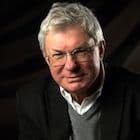
Andrzej Celinski was born on February 26, 1950, in Warsaw, Poland. Celinski graduated from the University of Warsaw with a degree in social sciences. After graduation, he became actively involved in several opposition movements including the Workers’ Defense Committee and Solidarity.
Celinski began organizing protests against Poland’s communist regime at an early age. As a teenager in 1966, he rallied thousands of people gathered for a High Holy Mass at Saint John’s Cathedral for a peaceful, anti-government march to the Communist Party headquarters in Warsaw. Celinski joined the 1968 and 1970 protests that were suppressed by the government.
Following the 1980 Lenin Shipyard strike in Gdansk, Celinski was tapped as an expert advisor to the Founding Committee of Solidarity, the first independent trade union in the communist bloc. Soon after, the members of the committee recognized his ability for organization and appointed him the secretary of the board of the Founding Committee. In this position, Celinski was tasked with structuring and organizing the body’s meetings. When authorities declared martial law and officially banned Solidarity in December 1981, Celinski was arrested for his activism and spent a year in prison.
After the fall of communism in Poland, Celinski was elected as a senator from Solidarity and served from 1989 to 1993. Celinski was then elected to parliament where he served for over a decade, including a stint as minister of culture from 2001 to 2002 in Prime Minister Leszek Miller’sgovernment.
Twitter: https://twitter.com/AndrzejCeliski1