Interviews with Andrzej Celinski
Poland
Background
Andrzej Celinski discusses his family’s history.
Transcript
So I was born on February 26, 1950 in Warsaw. My birth family was perhaps a mismatch – my mother came from a very wealthy family of Warsaw burghers. This is important to note because the intelligentsia at that time, such as in Warsaw and Kraków, played an important social role which is meaningful in Poland´s history. My father, on the other hand, was of peasant stock, came from a very poor rural family. When he died in 1969, as a wealthy man – comparatively speaking under then-Polish conditions – he was dying from a disease caused by malnutrition.
This testifies to the poverty that he came from in his birth family. And he was only able to get an education because, which was an absolutely miraculous circumstance, because at the time when he completed his course in rural elementary school, and he went to the junior Catholic seminary – this was his only opportunity for any education – in 1933 or 1934, – he was almost immediately thrown out because it turned out that his personality was very poorly suited to this.
It turned out, and this family did not know about this because it was not only very poor but also culturally-deprived, the director of the elementary school came over to Dad’s parents’, my grandparents’ home, and shared that his [father’s] grandfather was active in the January Insurrection in 1863. [The January Uprising of 1863 was a series of peasant revolts in Poland, Lithuania, and Belarus against czarist Russia. Eventually subdued by the Russians, the uprising became a focal point in Poland’s national consciousness.] Which in the region of Podlasie, where all this was taking place, was an extremely rare circumstance because during the January Insurrection the peasants in that region were on the side of the czar, rather than on the side of the insurrectionists.
Thanks to this, he was accepted into the Cadet Academy in Rawicz, as the only peasant child that time. The Cadet Academy was a military secondary school of sorts, which prepared youths for service in the armed forces as officers. Mainly these were badly-behaved children of officer families or of governmental civil servants. So he was the only peasant child in the course that he was enrolled in, and afterwards things just rolled along. He was recognized to have promise, and he continued his education. So these are, these are my roots.
I graduated from high school in 1967, and a very good Warsaw liberal arts high school. Just to make very sure – my parents never ever had any links with any authority in power in Poland – to the contrary, my father concealed his wartime biography because during the war, owing to the Cadet Academy and also other various events in his youth, he served in a detachment called OSA-KOSA. [A specialized unit within the Home Army formed to resist Nazi occupation during World War II.] This was a detachment of the “KEDYW” [Subversion Branch] of the Central Headquarters of the AK [Home Army].
This was the name that it had, it was part of the counterintelligence service and also in charge of executions for agents, spies, Gestapo and NKVD [a law enforcement agency of the Soviet Union associated with the Soviet secret police] agents and such, et cetera. Luckily for my father, all the members of this detachment, except for 3 persons, were actually killed in action. I say luckily – this is a typically Polish historical situation, so there was no one left to denounce him to the Communists in later years [for his involvement in the execution of NKVD agents]. Incidentally, he never spoke, even to us, about where he was during the wartime years. And only when he passed away, his commanding officer came by, who dictated the biography to the journalists of a Warsaw daily that is no longer in circulation which was called Zycie Warszawy.
Obituaries were the only place where censorship was not really involved much, especially when someone did not have any current controversies ongoing with the authorities, so that those bios were not censored much. So thanks to that we found out things which we would have never known if not for this particular circumstance. So that was Dad, he worked as an engineer, he passed away relatively early. My mother is still alive today, and incidentally, she counts as one of The Righteous Among The Nations.
She has that medal, the Righteous Among the Nations of the World from Yad Vashem, so that is pretty much it. [“Righteous Among the Nations” is a distinction bestowed by the government of Israel upon non-Jews for heroism during the Holocaust. Yad Vashem is the memorial and institution established by Israel to document and commemorate the Holocaust.]
About Andrzej Celinski
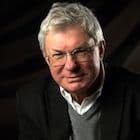
Andrzej Celinski was born on February 26, 1950, in Warsaw, Poland. Celinski graduated from the University of Warsaw with a degree in social sciences. After graduation, he became actively involved in several opposition movements including the Workers’ Defense Committee and Solidarity.
Celinski began organizing protests against Poland’s communist regime at an early age. As a teenager in 1966, he rallied thousands of people gathered for a High Holy Mass at Saint John’s Cathedral for a peaceful, anti-government march to the Communist Party headquarters in Warsaw. Celinski joined the 1968 and 1970 protests that were suppressed by the government.
Following the 1980 Lenin Shipyard strike in Gdansk, Celinski was tapped as an expert advisor to the Founding Committee of Solidarity, the first independent trade union in the communist bloc. Soon after, the members of the committee recognized his ability for organization and appointed him the secretary of the board of the Founding Committee. In this position, Celinski was tasked with structuring and organizing the body’s meetings. When authorities declared martial law and officially banned Solidarity in December 1981, Celinski was arrested for his activism and spent a year in prison.
After the fall of communism in Poland, Celinski was elected as a senator from Solidarity and served from 1989 to 1993. Celinski was then elected to parliament where he served for over a decade, including a stint as minister of culture from 2001 to 2002 in Prime Minister Leszek Miller’sgovernment.
Twitter: https://twitter.com/AndrzejCeliski1