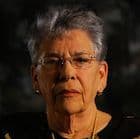
Interviews with Ana Lazara Rodriguez
Cuba · Interviewed February 3, 2011
Dissent in Cuban Prisons
Tells how Cuban prison guards punished hunger strikers by denying them water.
Transcript
We have in solitary confinement sometime one year. They always put water out of our reach when we do hunger strikes. And I have been once in Guanabacoa, that at the third day of without water, I start having hallucinations. And I knew, because I was studying medicine in Cuba before I entered prison, that I was losing, you know, neurons by thousands.
But then I start seeing a jar at the third day of the hallucination. And the jar was full of ice and water. And it was leaking, you know. When the jar is very cold and the temperature outside is hot. And I said well, my brain tell me, “I don’t believe in you because jars don’t fly.” Then I start hearing the wind of the jar. And I say, “Oh my god. I’m going to believe you!” Then I jump to grab the jar and I hit myself against the wall and I lost conscious.
And when I recover, it was a doctor there. And he said, “Now, we are going to go to the hospital and we are going to treat you.” And I say, “No. I’m going to die here. And believe me, when I die, all those countries that don’t know how to behave against communism, are going to have my name in every conference in the United Nations Human Rights Commission, in every place of this world. Even if you go to a doctor’s conference, my name is going to appear. That is my punishment for you. I’m not going to stop the hunger strike. I’m going to die here.”
Then they stop the hunger strike. They were the ones that give us. Because the hunger strike was – because they put us in the same – they want to put us in the same galleries of the common-law prisoners. And believe me, this is a nightmare. It’s better to die. Because those people don’t know how to defend themselves with words. They always fight with knife, with everything. So if you live there, you have to be like them. If you convert like them, you stop being a political prisoner. That is what they do right now with the people in Cuba when they dissent. They put them in the same place of the common-law prisoners. They try to do to us that, like 20 times. All the times we decide to die before they let them do that.
So in this occasion, they have to stop the hunger strike and send us to the hospital to recover from those. But I know how water can do to you. Food is almost nothing, you know. At the third day of hunger strikes, you feel no hungry at all. You can live, you know, there without feeling hunger-ness until you die. But thirst – when you don’t have water is a nightmare. And they do that all the time to make you bend.
About Ana Lazara Rodriguez
Ana Lazara Rodriguez began her career as a dissident as a teenager in the 1950s, opposing the Cuban dictatorship of Fulgencio Batista. She continued her protest activities after Fidel Castro, who overthrew Batista in 1958, began to establish a Communist dictatorship. Rodriguez was a young medical student in 1961 when she was imprisoned for her anti-government views and activities. She and a group of her fellow female prisoners of conscience became known as the “Plantadas” (those who will not bend) because they refused to co-operate with their jailers, resisting with methods ranging from insults to hunger strikes. Rodriguez was released in 1979 and traveled to the United States via Costa Rica. In May 1995, she published ‘‘Diary of a Survivor” about her experiences in prison.