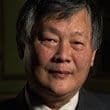
Interviews with Wei Jingsheng
China · Interviewed January 7, 2010
The Fifth Modernization: Democracy
After Chinese Communist leaders announced the “Four Modernizations,” he responded with a proposal for “The Fifth Modernization: Democracy.”
Transcript
This should be traced back to 30 years ago, year 1978, 1979. At that time, China was in a changing time. Soon after Mao Zedong’s death, Mao Zedong’s wife was arrested. And Deng Xiaoping had not come back to office. China was changing. Most people believed that it is better to follow the Communist Party and maintain the tyrant regime.
But our young people – I was very young then – our young people thought China should learn Western democracy. Only with Western democracy, all aspects in China – culture and economy – can expect to achieve normal developments. So at that time I posted some Dazibao (“big-character posters”) on the Democracy Wall. One of the most famous ones was The Fifth Modernization: Democracy.
We advocated that China should take a democratic course. Immediately it received support from the ordinary people. So the Communist Party arrested me.
In the decade since the Cultural Revolution, we young people felt distressed because we meant to reform this society out of good intentions. But the more reforming there was, the worse it became. The life of the general population was very difficult.
So we gradually discovered the Western democratic system was good, especially the American democratic system, which the people envied very much then[BJF1] . After some preliminary studies, we figured that China, only with democratization, and implementing democracy through political system reform, can China march on the normal track in all aspects, and get rid of poverty. This was what people were thinking then.
As a matter of fact, the main purpose of the article was to reveal the disasters created by the Communist Party and to awaken the general public. Actually at that time our own knowledge of Western democracy was not much, but we could see its outcome is very good. The general population lives a very good life, which was all the general population needed to see.
Because at the very beginning the Communist Party had a set of communist ideals and used this to attract the people. Many young people joined the Communist Party, so the Communist Party could take power. But after the Communist Party took power, it continuously brought in many disasters.
People do not believe in communism as much. So in early 1970s, Mao Zedong and Zhou Enlai [top aide to Mao Zedong and foreign minister] announced the Four Modernizations, which is national defense, they are: industry, agriculture, national defense and science, and technology. They used the four aspects as a dream to attract the people.
So I proposed The Fifth Modernization: Democracy. What I meant was, without the fifth modernization, without democracy, all the other modernizations could not possibly be achieved. Even though modernization is occurring, there would be no benefit to the general people.
Well, I am thinking it was kind of related the education I received when I was young. My father’s generations were among those people who sacrificed their life for this country and engaged in the revolution for the dream and for the good of China.
Then, despite the fact their dreams were different from ours, this kind of spirit passed down to us. We don’t just want a good life for ourselves alone. We felt it intolerable to see other people living a difficult life. That was why I eventually selected this path.
About Wei Jingsheng
Wei Jingsheng was a prisoner of conscience in China for more than 18 years. Born in 1950 to parents who were Communist Party members, Wei served in the People’s Liberation Army and worked in the countryside during the Cultural Revolution.
In 1978, he wrote an essay called “The Fifth Modernization: Democracy” and posted it in a place that had come to be called Democracy Wall. Unlike most pro-freedom authors in China during that time, Wei signed his name to “The Fifth Modernization,” which was a direct challenge to the Beijing government’s strategy of instituting economic reforms while continuing to suppress political dissent. Wei was soon arrested on the charge of being “counter-revolutionary” and served more than 18 years in prison, including several years in forced labor camps and eight years on death row.
By the mid-90s, Wei was China’s best-known political prisoner. There was strong international pressure for his release and, in 1997, he was allowed to go overseas for medical treatment. He now lives in the United States and heads the Overseas Chinese Democratic Coalition.