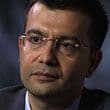
Interviews with Nima Rashedan
Iran · Interviewed January 5, 2011
Effect of Free Radio
On the impact of foreign news services in Iran.
Transcript
I think Jeff Gedmen [the former President of Radio Free Europe/Radio Liberty] and Radio Free Europe, Radio for the Persian Service, they did a brilliant job. I really admire what he did because he was one of the, I guess, the best, let’s say, Sovietologists in United States politics. He had experience with this whole fall of Communism; and using the very same mindset, he just came to Prague. And he let young people from street of Tehran directly talk on Radio Farda [the Iranian branch of Radio Free Europe/Radio Liberty]. He just trusted them. And he knew that it´s going somewhere.
At the moment that whole, you know, a lot of people in different, you know, power places and centers in the U.S. and in D.C., they didn’t like that. He just trusted the Green Movement and he gave them a tribute. If you see the quantity of listeners of Radio Farda before and after Green Movement, you see what impact the trusting ordinary citizens, no matter in Budapest or Curacao or in Tehran makes. Radio Farda became like a toolkit for democracy protestors. They were listening to radio. They knew when is the next gathering, where is that. And it helped very, very much technical help to young people, getting organized, being politicized. This is actually a really great thing which happened.
We had a country. People were anti-establishment. They didn’t like this government, but they were not politicized – they didn’t know about politics – they were not considering themselves as a member of a political movement – they did not have any political identity. They just said, “I’m fed up with this government.” With the help of Radio Farda, with the help of VOA, you gave these people an identity. We are against this regime because this regime is discriminating against women, discriminating against ethnicities; they are suppressing Islamic Sunnis in Iran.
And so, this was a very big achievement of Radio Farda. Radio Farda is – you can receive it in places where people don’t have a satellite instrument. And these are exactly the very same people that no matter in Venezuela or Tehran, by using social benefits, the government wants to compromise them. They want to make an army of poor against the democratic activists, which doesn’t work – which never works – because of the problems the poor have in Iran, because of lack of employment, unemployment rate, and the whole set of problems. Paying $40 a month is just bringing the prices up and they are even more anti-government.
So, I think Radio Farda was a great help; and VOA Persian Service was a great help because it had different listeners and just different viewers from BBC Persian Service. The BBC Persian Service attracted the young people between 17 and 35. The target group was different. They brought a lot of young, enthusiastic journalists who were close to [former President of Iran, Mohammad] Khatami and the reform movement to London. And they did a brilliant job. VOA PNN [Voice of America’s Persian News Network] is more targeted towards Iranian middle age or 40- to 45-year-olds, which are seeking for another discourse in media; they are used to another kind of media.
About Nima Rashedan
Nima Rashedan was among the first Iranian cyber-activists. Born in Tehran in 1974, his father was a leftist opponent of the government headed by the Shah, so the family was forced into exile in the United States but returned to Iran after the 1979 revolution.
Upon his return, Rashedan became a member of student organizations and worked as a journalist, becoming one of the first writers to publish articles in Farsi on the Internet. In the late 1990s, after the election of President Khatami, he began writing pro-democracy articles.
In 1998, Rashedan was arrested and served time in prison, including a month in solitary confinement. After his release, Rashedan immigrated to Switzerland. He now lives in the Czech Republic and continues his work as a cyber-journalist and advocate. A frequent focus of his work is the similarity between the methods and objectives of the current Iranian regime and those of the former Soviet Union.