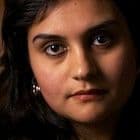
Interviews with Namees Arnous
Egypt · Interviewed August 3, 2012
Social Media
The role of social media in the Egyptian Revolution
Transcript
Twenty-fifth of January is the same word to 25 Jan. And 25 Jan, actually we used it on Twitter, #25Jan to use it on Twitter. So we used it to say 25 Jan, but it means 25th of January is the day we started our revolution.
We used a lot of ways to get our freedom before the 25 Jan and after the 25 Jan, after the revolution, like social media – Twitter, Facebook, YouTube – like marches in the streets, like demonstrations, like sit in Tahrir Square till Mubarak gone and get our freedom.
Actually I believe that all of this ways connect and united with each other and complete each other because we have a very, very large number of people who log in daily in the Internet and they use the Twitter and the Facebook. And we tried to deliver our messages through Twitter and Facebook to talk with them about why we need to change the regime, what’s the meaning of democracy, what’s the meaning of freedom. And by marches and demonstrations we just knock the doors of the people in the streets – alarm – just we have a security state, we have violation of – against our humanity, we have – we have dictatorship. And they complete each other.
But the most thing make this ways or this tactics effect, we have a generation – the 18 generation who – were born and 18. They believe in freedom more than anything. And they search – seek for their freedom, even they can pay any price. They believe in their freedom. They decided to – went into streets, went into squares all over Egypt to express their selves, to deliver their messages, to get good life, to have freedom to express themselves, freedom to educate well, freedom to get health care, freedom to life like other nations because they believe in Egypt.
I think the more effective thing in this revolution is the generation, the youth. They believe in their freedom. They also affect their parents, their families, the older than them because they believe what they did. They believe in democracy, they believe in freedom, they believe in a change, and they affect others. That’s it.
About Namees Arnous
Namees Arnous is a well-known television reporter and civil society activist in Egypt. During the Egyptian Revolution, Namees was asked to spread inaccurate stories by El Mehwar Television, her employer. When Namees used social media to publicize the channel’s stance against the Revolution, she was characterized as being a foreign agent and receiving money from foreign governments. She resigned from El Mehwar.
Namees then founded a new media production company which includes television, radio and social media outlets. She aims to promote human rights and democratic principles by training individuals in new media. She is currently working on a project to produce a new television program aimed at Egyptian women, focusing on issues of concern to them.
Namees has worked on a number of civil society campaigns. These include the Change Your Life Campaign, which aims to encourage women to be independent and the Be Free Campaign, which addresses young Muslim women extremists.
She worked on a civic journalism campaign to cover youth participation in elections in their respective regions. The campaign was broadcast on her NGO’s radio station and website.
Namees was among the inaugural group of the George W. Bush Institute’s Women’s Initiative Fellowship Program in 2012, a leadership program designed to empower and equip women to catalyze change.
Namees has her Bachelor’s degree in Mass Communication with a focus on Television and Radio.