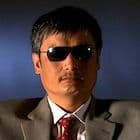
Interviews with Chen Guangcheng
China
Religious Freedom
“The Chinese Communist Party is scared of any opportunity in which people might come together.”
Transcript
China currently has no freedom of religion. There are many “underground churches” [where congregations must worship in secret because they could be arrested for practicing their faith] that are still being persecuted today. When the Chinese communists say “religious freedom” what they really mean is “religious freedom under our control!”
So, if a group of people can have total control over another group of people how can there be freedom? I believe that religious people in China will serve important roles in China’s future on the issues of freedom and rule of law. I would like to take this chance to emphasize that the issue is not the Chinese government; the Chinese government is just a puppet.
The government is just a tool and the real entity in control is the Chinese Communist Party. The real power is in the Party and whoever controls power within the Party. I believe the Chinese Communist Party is scared of any opportunity in which people might come together. The reason the communists hit hard on religion in China is because religion can gather people and unite them.
About Chen Guangcheng
Chen Guangcheng was born into a poor family on November 12, 1971 in China’s Shandong Province. As an infant, Chen suffered a fever that left him permanently blind. Chen developed a keen interest in legal practice. Teaching himself the law by studying legal texts and auditing various courses, Chen assisted people in his village with legal matters. In 2003, he married an English teacher and the couple had two children.
Chen’s activism began in 1996 when he petitioned the central government in Beijing over taxes that were improperly levied against his family. According to Chinese law, families with disabled persons receive tax exemptions that were not being granted to Chen. The campaign was successful and Chen began advocating for people with disabilities who had similar grievances with the government. Soon, he gained notoriety as a prominent activist for the disabled in China.
In 2005, Chen spent months investigating reports of forced abortions and sterilization being carried out by Chinese authorities to enforce the country’s one child policy, officially known as the Family Planning Policy. This law was enacted in 1978 and restricts most urban couples to a single child. When his investigation was complete, Chen filed a class action lawsuit on behalf of the women he interviewed against the National Health and Family Planning Commission of China’s office in the city of Linyi. This was the first suit of its kind challenging the implementation of the one child policy. The case was rejected and the local government retaliated by placing Chen in de facto house arrest. In 2006, Chen was formally tried and charged with instigating destruction of public property and disturbing the peace , which Chen decried as baseless given his house arrest and constant surveillance by the police. He was convicted and sentenced to four years in prison. After the proceedings, Amnesty International declared Chen a prisoner of conscience.
Chen was released from prison in 2010 only to once again be placed under house arrest by local authorities. His house was routinely monitored by security agents who prevented anyone from entering or exiting. Chen and his family were subject to constant harassment and abuse during this period.
Chen escaped from house arrest in April 2012 and fled to Beijing, where he sought refuge at the United States Embassy. In May 2012, Chen left the embassy after several weeks of negotiations, during which the Chinese government provided assurances that it would release the dissident from house arrest and investigate the actions taken against Chen by Shandong provincial authorities. Soon after leaving the embassy, Chen learned that his family had received numerous threats and feared the government would break its promises. He decided to leave China with his family and was offered a visiting scholar position by New York University. Chen accepted and arrived in New York with his family on May 19, 2012. He continues his work from the United States, advocating for human rights and democratic reform in China.