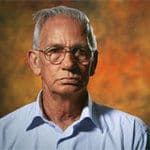
Interviews with Arturo Pérez De Alejo Rodríguez
Cuba
Government Repression
“Their preferred form of repression is psychological.”
Transcript
[The government] uses many methods of repression; they use physical repression as a last resort because their preferred form of repression is psychological. Because they of course want to appear as if they’re not oppressive; so they use what I call “low intensity” suppression. They make your life miserable; they imprison you, they release you, they watch you, they ask for your ID in the street and they pick you up during their patrol, they stop the bus you’re riding and they take you off, they pick you up in a car and drop you (X) number of kilometers away from your town in an deserted area where cars do not pass by.
They did that to Juan Carlos González Leiva, a blind man, who is a human rights activist and is a freelance journalist; they took his cane and left him in a deserted area. [Juan Carlos González Leiva is a Cuban lawyer and freedom advocate.]
So imagine, the poor man had to break a sugar cane and started walking and screaming until he found someone who told him where he was. And that´s the kind of repression that they use. They do not pick you up or beat dissidents in the street. No… If they do…they do it secretly…in some dungeon…because they don’t want the press or anyone to know. But they do beat you up. Yes they do; because there are eyewitness accounts. It is hidden; it is in private so no one can film that they’ve been given a beating, but the [security forces] are trained and evil.
We saw it ourselves in prison, we saw it in the prisons… and those are forms of repression that they use; they target and harass your family, try to hinder you… If your child is studying and wants to go to the university, they prevent them.
They employ various strategies that make life impossible for Cuban people. And then they create… a “conspiracy” and for no special reason, they take you out of your work or remove your son from his good job. It is a stealthy crackdown that is constant…constant…constant on the population; against the people who speak out. And it’s not just dissidents [who should worry about repression] because well, there are people who are not dissidents or they are not associated with any organization and are unafraid to speak out and say things.
And then they [the regime] seek you out sometimes and fabricate a crime. Sometimes they make up charges against people. And since the courts are theirs, the police are theirs, and the judicial system and everything, who says otherwise? They had no reason to condemn us and and yet we were sentenced up to 20-25 years and in some cases almost 30 years [referring to the Group of 75 nonviolent dissidents who were arrested during the Black Spring crackdown].
[There is] much terror; much psychological terror. People have it in them… look, here [in the United States] there are Cubans, who have had no connection with dissidents and have come here for economic reasons or whatever, and you start to talk about these things [opposition activities] and they begin to look side-to-side; they look around because of that fear, of who might be listening. There are people who don´t want to take pictures with me… because if they go on Facebook… imagine… because then they can’t go to Cuba… here in the U.S.!
Here in Miami… you don’t have to go far; because that [fear] is ingrained since childhood; this psychological terror. It is a terror of uncertainty; you don´t know what might happen because it is always present in you, above everything; like the Sword of Damocles, hanging above your head.
The most extreme thing is that a professional, a medical professional doesn’t earn more than $30 a month. They have instituted the duality of the “chavito” [A nickname for the Cuban convertible peso]. But the chavito is worth 25 Cuban pesos. And you have 30 chavitos, and to buy something in the shopping center, it costs you 600 pesos. Imagine that you are a doctor on a bicycle; a surgeon and you have to go operate on a bicycle. And when you earn something, you have to go buy a small can of this or that; measuring the monthly wage for clothes, food, shoes for your child. In the end, who lives like that?
The people there do not live. People complain but they do not wake up. They do not wake up, but there they are, everyone is afraid. It’s a terror of the unknown. It is a fear of what might happen and what might not happen because of the government’s repression.
[The Cuban convertible peso (CUC) is one of Cuba’s two official currencies; the other, which is more widely used by average citizens, is the Cuban peso (CUP). The CUC is pegged to the U.S. dollar and worth 25 times as much as the CUP.]
About Arturo Pérez De Alejo Rodríguez
Arturo Perez de Alejo Rodríguez was born in Manicarauga, Cuba on May 23, 1951. He received a degree in topography and worked in several different fields, including as a subsistence farmer and as a surveyor. As a young man, Arturo believed the 1959 Cuban Revolution that brought Fidel Castro to power would change Cuba for the better.
Arturo soon became disenchanted with the Castro regime. He was drafted into military service and sent as part of a Cuban force in Angola’s civil war during the 1970s. As a soldier, he witnessed acts of brutality that sharply contrasted with the official version of events.
In 1980, thousands of Cuban citizens stormed the Peruvian Embassy seeking asylum to escape from the Castro regime. Following the incident, the regime announced it would allow people to leave Cuba, but privately, the government encouraged its supporters to harass and brutalize those fleeing the island. The events at the Embassy of Peru led Arturo to break with the government.
In the 1990s, Arturo became more active in the Cuban opposition. In 2001, he founded the Escambray Human Rights Front, which monitored human rights violations in the region. Arturo was arrested in March 2003, as one of 75 nonviolent dissidents during a massive crackdown known as the Black Spring. He was subjected to a summary trial and sentenced to 20 years in prison for his opposition to the Castro regime.
After more than seven years as a prisoner of conscience, Arturo was freed in 2010 when the Catholic Church and the Spanish government negotiated the release of the 75 Black Spring prisoners. He and his family were exiled to Spain where they lived for several years, before resettling in the United States.