Policy Recommendations · August 13, 2026
CRINK countries increasingly cooperate around the world. U.S. policy must reflect this new dynamic
CRINK may not be an alliance, but American strategy should be based in the fact that our adversaries understand, and exploit, the knowledge that when they help each other, it’s harder for America to confront them independently.
author
Elizabeth Kennedy Trudeau
The Bradford M. Freeman Managing Director, Global Policy
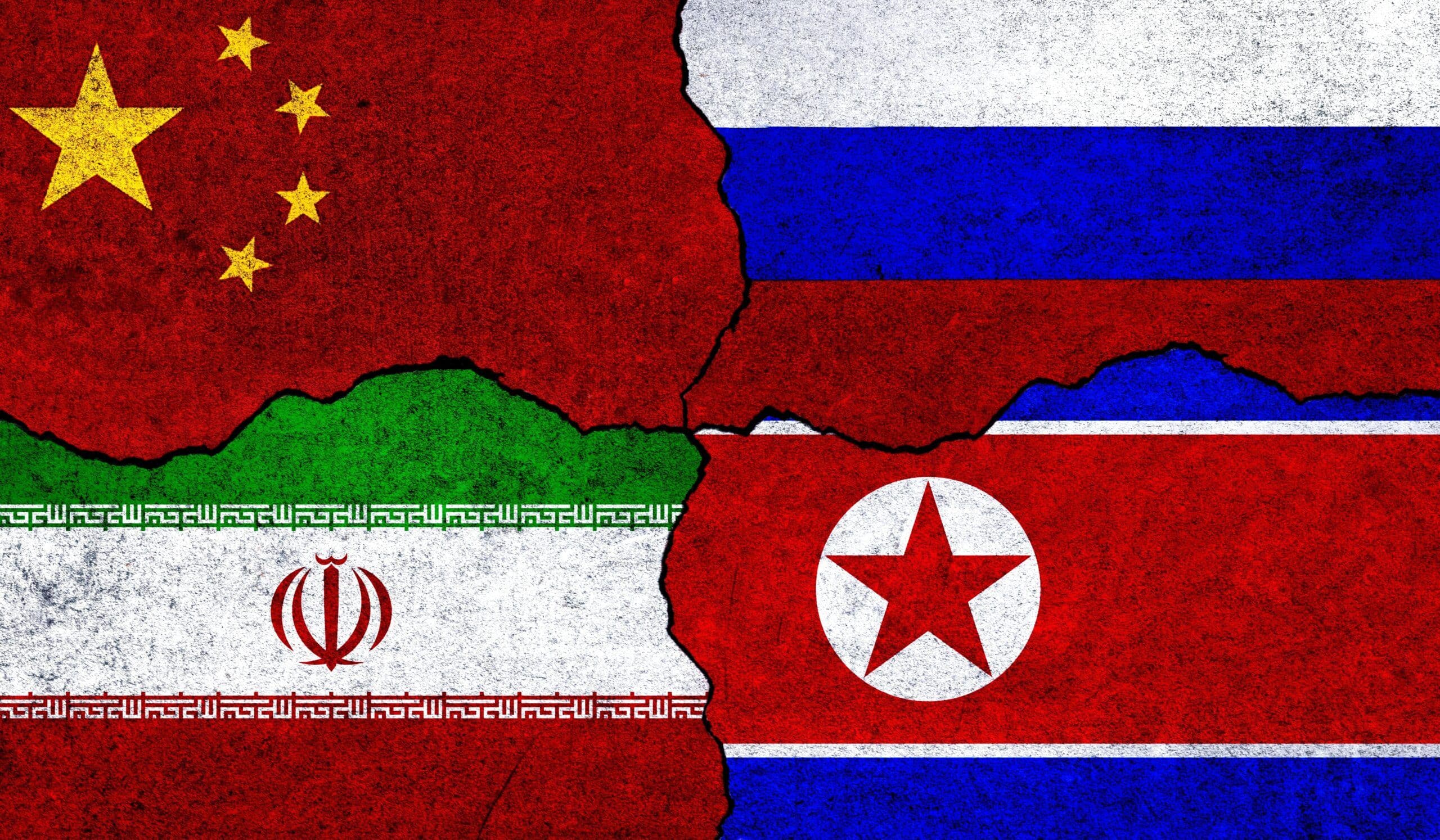
This summer has made clear: The world’s major hotspots, from Ukraine to the Middle East and beyond, aren’t happening in isolation.
The interests of China, Russia, Iran, and North Korea in these grinding conflicts increasingly overlap, as the countries known collectively as CRINK cooperate more and more, albeit bilaterally.
The CRINK governments are loosely aligned, though, not in a formal alliance. These governments are willing to help one another withstand American pressure, sustain conflicts, and force the United States and its allies to divide their attention and resources. American strategy needs to account for the acceleration of actions of this nefarious network.
The Bush Institute released a series of straightforward recommendations in June on how U.S. policy can address CRINK. Rooted in core American values of accountability and freedom, the recommendations offer a path forward based on investment in human rights and soft power. They also offer ways to harness the power of our alliances and sharpen enforcement of tools like sanctions and investment in key sectors like semiconductors and critical minerals.
CRINK’s interests are global, expanding, and interwoven. While they don’t turn CRINK into a single adversary, we are increasingly seeing a common thread:
Ukraine
- In Ukraine, North Korean soldiers are fighting with Russian forces as Russia pursues its illegal war, while Pyongyang has developed a pipeline of ballistic missiles and sends millions of artillery rounds to Moscow.
- Even this week, Ukraine reported that Russia used North Korean missiles in an attack on the southern Ukrainian city of Zaporizhzhia, killing at least six people.
- Now, nightly, Ukraine is pummeled with Russian drones based on Iranian technology, and, even as early as 2022, U.S. officials cited Iranian shipments of “hundreds of drones” that Russia deployed to terrorize Ukrainian civilians.
- China has helped keep Russia’s economy afloat and supplied dual-use goods that support its defense industrial base.
The Middle East
- In the ongoing conflict in the Middle East, Russia has reportedly provided Tehran with intelligence on the locations and movements of U.S. military assets, including satellite imagery allegedly helping Iran target American bases across the Gulf.
- Russia has also reportedly provided targeting data for Yemen’s Houthi rebels to attack Western ships transiting the Red Sea, effectively seeking to shutter global trade through this vital waterway.
- China’s dual-use technology feeds Iran’s weapons programs, including components and materials that support Iranian drone and ballistic missile output.
- China is also the principal importer of Iranian crude, buying about 90% of its output and giving Tehran its economic lifeline.
Africa
Africa has become an increasingly important arena in which China, Russia, Iran, and North Korea seek influence, resources, diplomatic support, and ways to blunt Western pressure.
- Russia has steadily expanded its security presence in Africa, replacing Wagner Group operations with the Kremlin-controlled Africa Corps while also, reportedly deceptively, enticing thousands of Africans to fight in Ukraine.
- China’s influence on the continent has boomed beyond its previous economic focus of infrastructure projects (such as the fully Chinese-funded and constructed headquarters for the African Union) and trade deals, including the now almost 50 Confucius Institutes set up across Africa to Iran to promote Chinese language and influence.
- Iran has steadily made inroads, focusing on diplomatic leverage with governments in countries such as South Africa and across the Sahel to reduce its isolation, particularly in multilateral settings.
- North Korea’s role is smaller but persistent: Despite international sanctions, Pyongyang has maintained relationships with some African governments, including earning hard currency through military training and construction projects on the continent.
The Western Hemisphere
In our own neighborhood of the Western Hemisphere, it’s much the same story, although each CRINK nation’s reach and objectives vary.
- China has by far the largest footprint, using trade, state-back lending and infrastructure projects to build leverage across Latin America, including the Chinese-operated $1.3 billion Chancay megaport in Peru and lithium mines in Argentina.
- Russia’s longstanding political and security relationships with governments such as Cuba, Nicaragua, and Venezuela include military cooperation and joint exercises. This includes deployments of Russian aircraft and naval vessels to the region. Russia continues to seek to provide Cuba with oil in light of tightening U.S. restrictions on the island, as well as debt relief and promised investment in Cuba’s deteriorating energy infrastructure.
- Iran’s previous relationship with Venezuela, in which cooperation included commerce in both drones and ballistic missile components, was disrupted by U.S. actions against former President Nicolás Maduro.
- North Korea’s presence is much smaller, centered primarily on diplomatic relationships, including its longstanding ties with Cuba.
It’s clear that major U.S. national security decisions must include a serious assessment of other conflict theaters, especially in light of reported shortages in military munitions stockpiles. Military deployments, sanctions, and diplomatic pressure can have consequences far beyond the country immediately involved.
We know: Crises do not happen in isolation, and the United States cannot plan on the assumption that it will confront one crisis at a time.
How to take on CRINK:
- Seeing these countries as connected must increasingly be a central part of national security planning, from the very top of U.S. diplomatic, economic, military, and intelligence circles.”
- Every major decision involving one of the CRINK countries should include an assessment of how the other three could respond, what resources they could provide to each other, and where they could exploit any pressure on the United States and its allies.
- The U.S. National Security Council has traditionally had a leading role. The NSC remains the ideal center for global planning across regions – rather than conflict by conflict. As a hub of coordination, the NSC should direct executive branch agencies to work cohesively to bolster alliances, including by increasing transparency and information sharing with allies, before new crises erupt.
- At the direction of the NSC, agencies can also work to supercharge the U.S. and allied defense industrial base and critical supply chains and also proactively leverage every economic and diplomatic tool to raise the cost of cooperation among these governments.
- Just as importantly, U.S. policy should look for opportunities to exploit the differences among CRINK countries rather than just assuming their interests will always align.
CRINK may not be an alliance, but American strategy should be based in the fact that our adversaries understand, and exploit, the knowledge that when they help each other, it’s harder for America to confront them independently.